
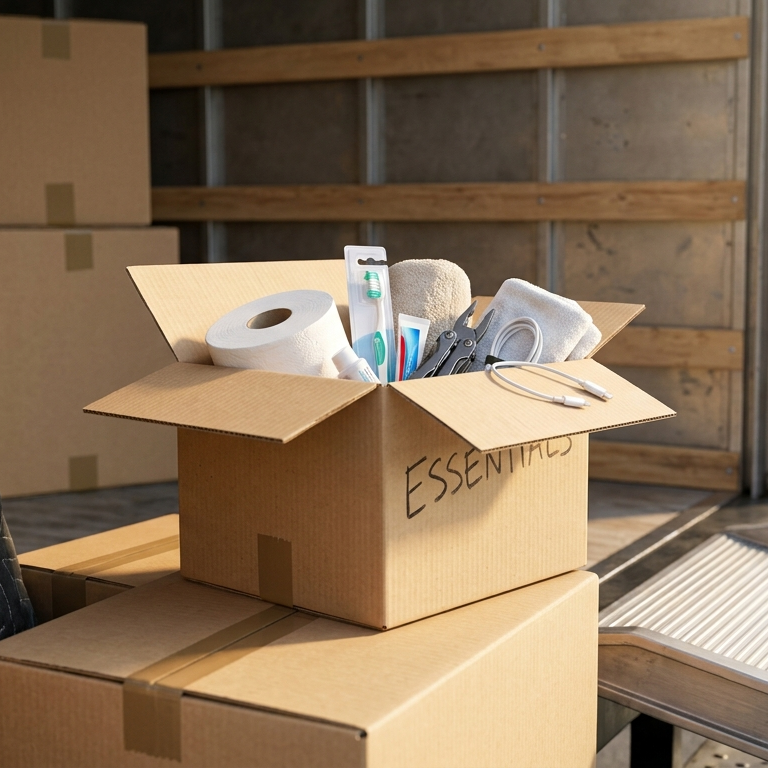
QUICK ANSWER: The things you pack last and unpack first are your essentials — the items you'll need immediately at the new home and right up until you leave the old one. This includes an essentials box (or "first-night box") with toiletries, medications, a change of clothes, phone chargers, basic tools, snacks, important documents, and anything for kids or pets. Pack these last so they're the final things loaded and the first things off the truck, and keep them with you rather than buried in the truck. The idea is that you can settle in for the first night without digging through dozens of boxes to find the necessities.
Moving day is chaotic, and the difference between a smooth first night in your new home and a frustrating scramble often comes down to one thing: what you packed last and can unpack first. The items you need immediately shouldn't be buried at the bottom of the truck under everything else. A little planning around your essentials makes the transition far easier.
The Principle: Essentials Go Last, Come Off First
The logic is simple. The things you use right up until you walk out of the old home and need right away when you arrive at the new one should be the last things packed, and the first things unpacked. By packing them last, they end up at the top or front of the load, easy to grab the moment you arrive — rather than at the back, buried under a houseful of boxes. This way, you can take care of your immediate needs without unpacking everything first. Everything else can wait; your essentials can't.
The Essentials Box
The centerpiece of this strategy is an essentials box, sometimes called a "first-night" or "open-first" box. It holds the things you'll want immediately at the new place, so you're not hunting through dozens of identical boxes for a toothbrush at midnight. Pack one (or one per family member) with the day-to-day necessities, and label it clearly or keep it separate so it doesn't get lost in the shuffle.
| Essentials box category | Examples |
|---|---|
| Toiletries | Toothbrush, soap, toilet paper, towel |
| Medications | Prescriptions and basic first aid |
| Clothing | A change of clothes, pajamas |
| Chargers & electronics | Phone and device chargers |
| Basic tools | Box cutter, screwdriver, scissors |
| Food & drink | Snacks, water, coffee supplies |
| Documents | Important papers and move paperwork |
| Kids & pets | Their essentials, comfort items |
What to Include
Think through your first evening and morning in the new home, and pack accordingly. Toiletries and a towel let everyone clean up. Medications and basic first aid should always be on hand, never packed deep in the truck. A change of clothes and pajamas means you don't have to find your wardrobe right away. Phone and device chargers keep you connected. Basic tools — a box cutter, screwdriver, and scissors — help you open boxes and handle small setup tasks. Snacks, water, and coffee supplies tide you over before you've found the kitchen things. Important documents should stay with you for safekeeping. And if you have kids or pets, pack their essentials and comfort items so they're cared for through the upheaval. These are the things that make the first night livable.
Keep Them With You
A key part of the strategy is not just packing essentials last, but keeping them accessible — ideally with you in your own vehicle rather than loaded onto the truck at all, if you can. That way, your necessities and important documents are never out of reach or at risk of being buried, delayed, or hard to locate among the truck's contents. If they do go on the truck, they should be loaded last so they come off first and clearly marked. The goal throughout is that the things you need immediately are the things you can reach immediately.
TIP: Pack your essentials box a day or two before the move and set it aside somewhere it won't accidentally get loaded onto the truck — like in your car or by the front door. Labeling it boldly ("OPEN FIRST") and keeping it with you ensures the one box you truly need doesn't disappear into the moving-day shuffle.
Why This Makes Moving Day Better
The payoff of packing essentials last is a much smoother arrival. After a long, tiring moving day, the last thing you want is to dig through a mountain of boxes to find your toothbrush, your medication, or your phone charger. With your essentials packed last, unpacked first, and kept close, you can settle in for the first night comfortably while the rest of the unpacking waits for a fresh start the next day. It's a small bit of planning that takes much of the stress out of the transition, letting you rest and get organized at your own pace rather than in a frantic search.
Frequently Asked Questions
What should I pack last when moving?
Pack your essentials last — the things you use right up until you leave the old home and need immediately at the new one. This includes toiletries, medications, a change of clothes, phone chargers, basic tools, snacks, important documents, and anything for kids or pets. Packing them last means they're loaded last and come off the truck first, easy to reach on arrival.
What is an essentials box?
It's a box (sometimes called a "first-night" or "open-first" box) packed with the day-to-day necessities you'll want immediately at the new home, so you're not searching through dozens of boxes for basics. It typically holds toiletries, medications, a change of clothes, chargers, basic tools, snacks, and important documents. Keeping it clearly labeled or separate ensures it doesn't get lost in the move.
What should go in a first-night box?
Think through your first evening and morning: toiletries and a towel, medications and first-aid supplies, a change of clothes and pajamas, phone and device chargers, basic tools like a box cutter and a screwdriver, snacks and water, important documents, and essentials for any kids or pets. These are the things that make the first night in the new home comfortable and livable.
Why should I keep the essentials with me rather than on the truck?
So they're never out of reach or at risk of being buried, delayed, or hard to find among the truck's contents. Keeping your necessities and important documents in your own vehicle means you can always access them, even if unloading the truck takes a while or runs into the next day. If they must go on the truck, load them last and mark them clearly.
How does packing this way make moving easier?
It means that after a long, tiring moving day, you can settle in for the first night without digging through a mountain of boxes for your toothbrush, medication, or charger. Your essentials are packed last, unpacked first, and kept close, so your immediate needs are handled while the rest of the unpacking waits. It removes much of the stress from arrival. It also helps the people and pets who find moving hardest, since having familiar comfort items and routines available right away makes a strange new house feel settled faster.
Should each family member have their own essentials box?
It can help, especially for families. Giving each person their own essentials box — or at least packing kids' and pets' necessities separately and clearly — ensures everyone's immediate needs are easy to find without rummaging through one shared box. The goal is for each family member to quickly access their toiletries, clothes, medications, and comfort items on the first night.
A Little Planning, A Smoother First Night
The smartest moving-day move is to pack your essentials last so you can unpack them first — toiletries, medications, clothes, chargers, tools, snacks, documents, and anything for kids and pets, all in a clearly marked essentials box kept with you. That way, after the chaos of moving day, you can settle in comfortably without hunting through every box. It's a small step that makes the transition to your new home far easier.
Want a smooth, well-organized move — Get experienced movers who help your moving day go right from load to unpack. Aardvark Movers serves Phoenix and the Valley. Call (602) 716-5555.


