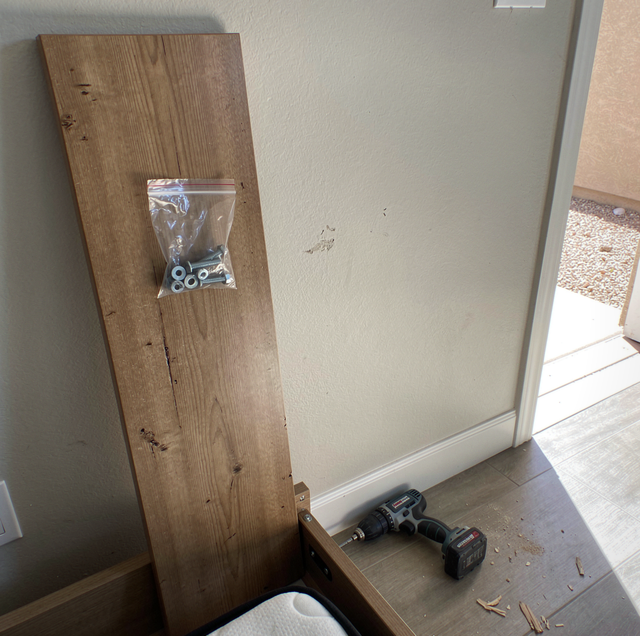
Most people assume a bed is the easiest thing to take apart: pull four legs, unbolt a headboard, done in minutes. That assumption holds until you hit a cam lock system with no screws, or a footboard bracket under the mattress.
An hourly quote bills for time and labor: a crew size, an hourly rate, and a clock that starts when the truck arrives (or when loading begins, depending on the company's policy) and stops when the last box is off the truck and the paperwork is signed.
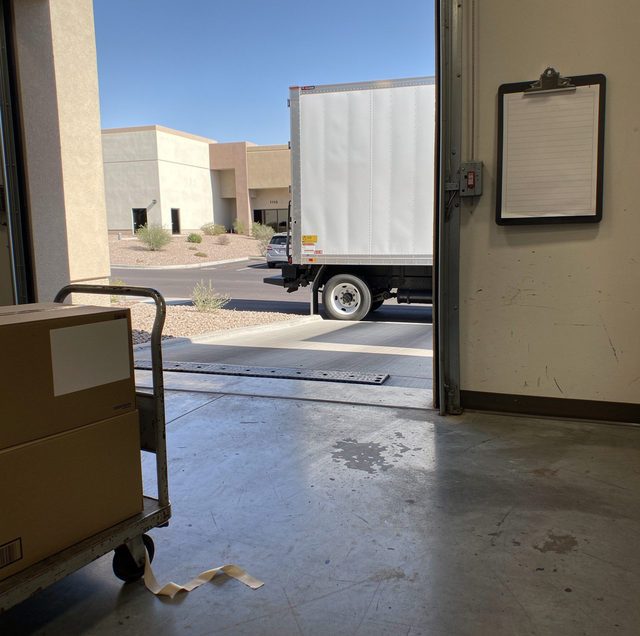
A closed cargo box in direct sun traps heat far more efficiently than the surrounding air, and once the inside temperature climbs past what a body can tolerate for hours of physical labor, the risk shifts from uncomfortable to dangerous.
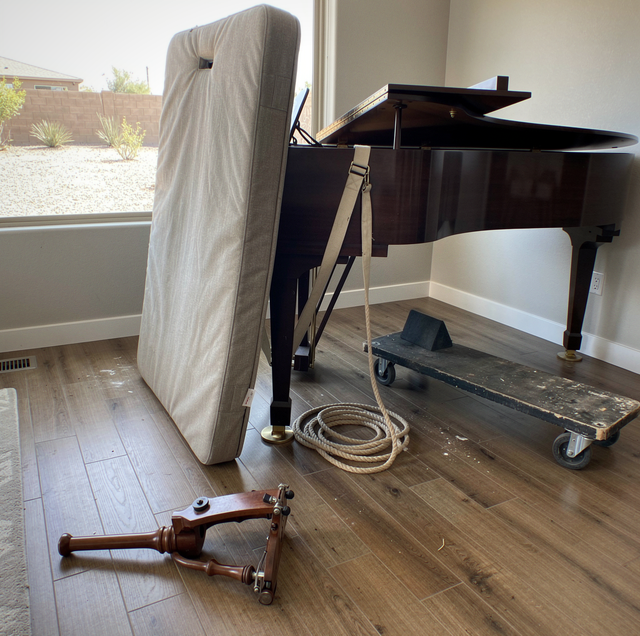
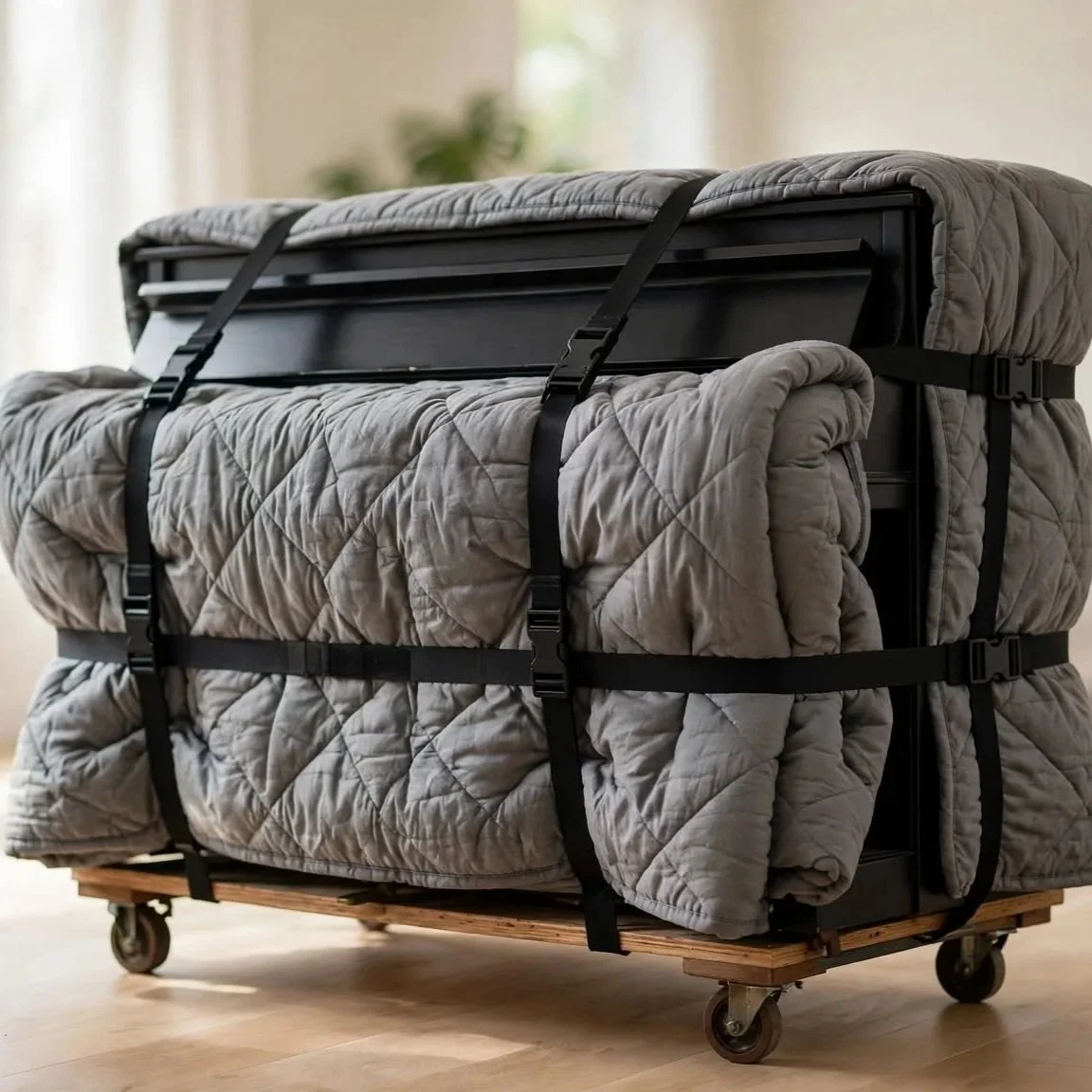
A piano rarely announces the moment it becomes too much for a few friends and a rented dolly. It sits in the same corner of the living room for a decade, gets played maybe twice a year, and then a move comes up.
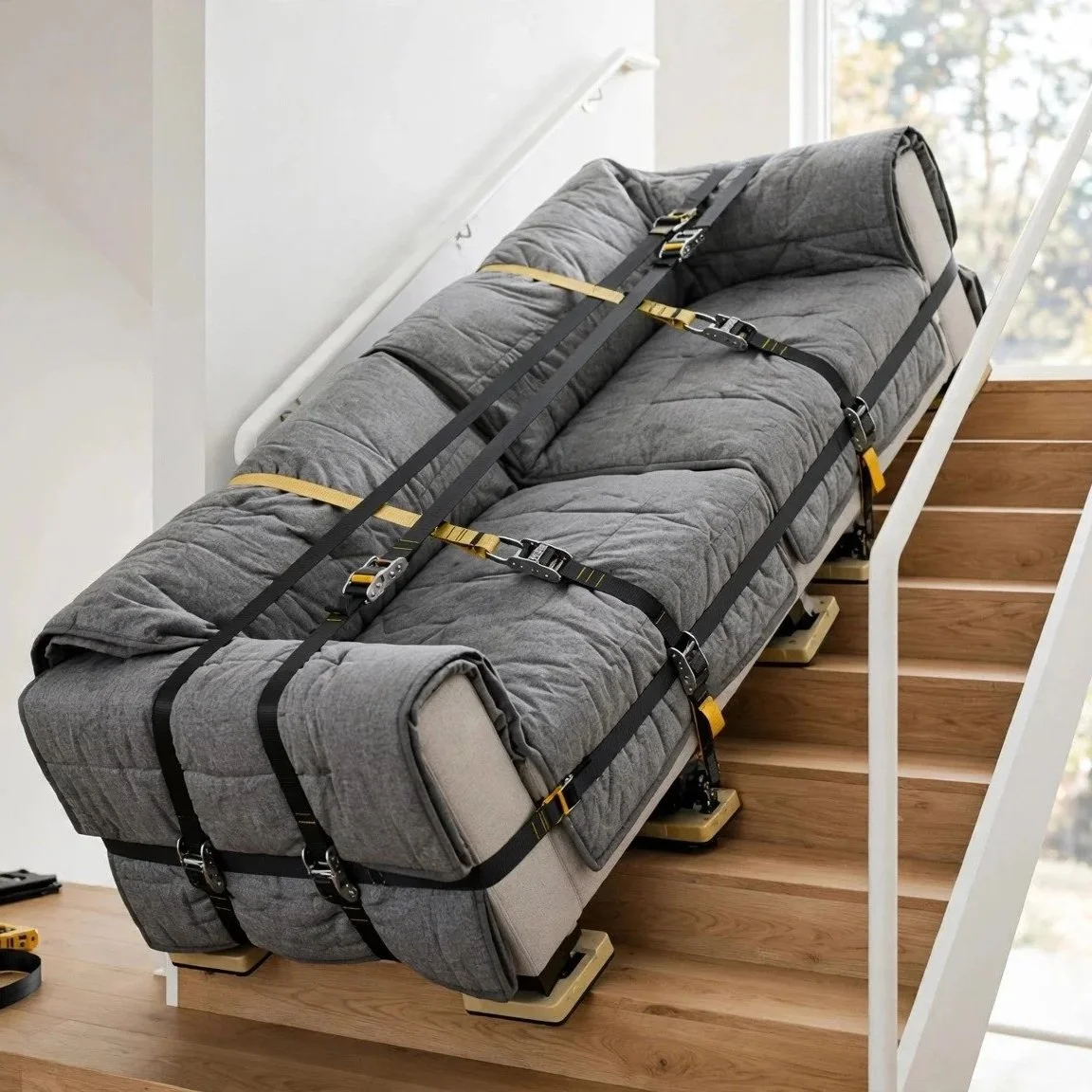
A two-person crew shows up for a "standard" two-bedroom move, takes one look at a sectional wedged into a basement rec room and a mattress that has to go down a switchback staircase, and the eight-hour estimate quietly becomes an eleven-hour day.
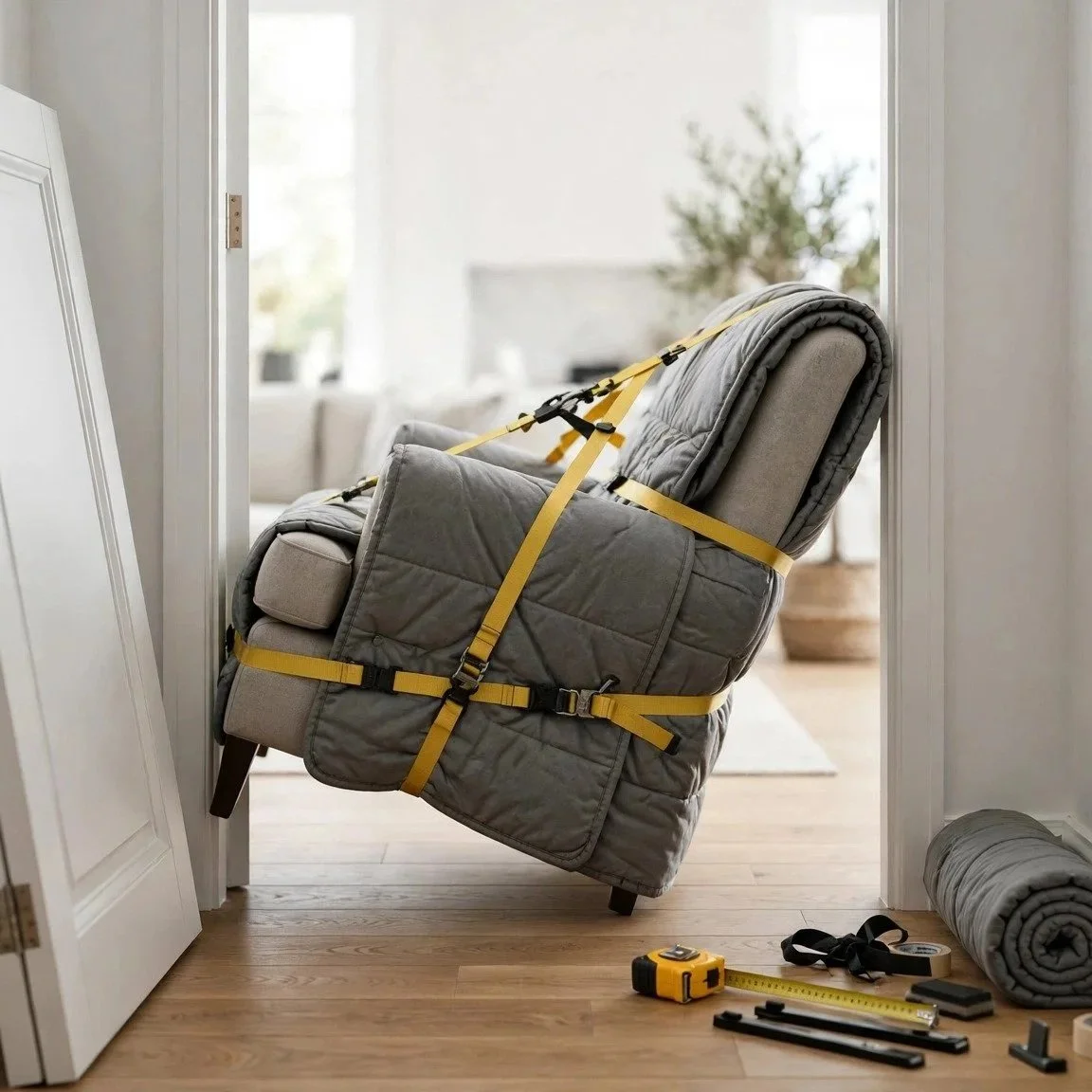
A dresser that slides across an open floor can stop dead in a doorway, and strength is rarely what solves it. Geometry is. A doorway is a fixed rectangle, and the piece you are carrying almost never meets it square.
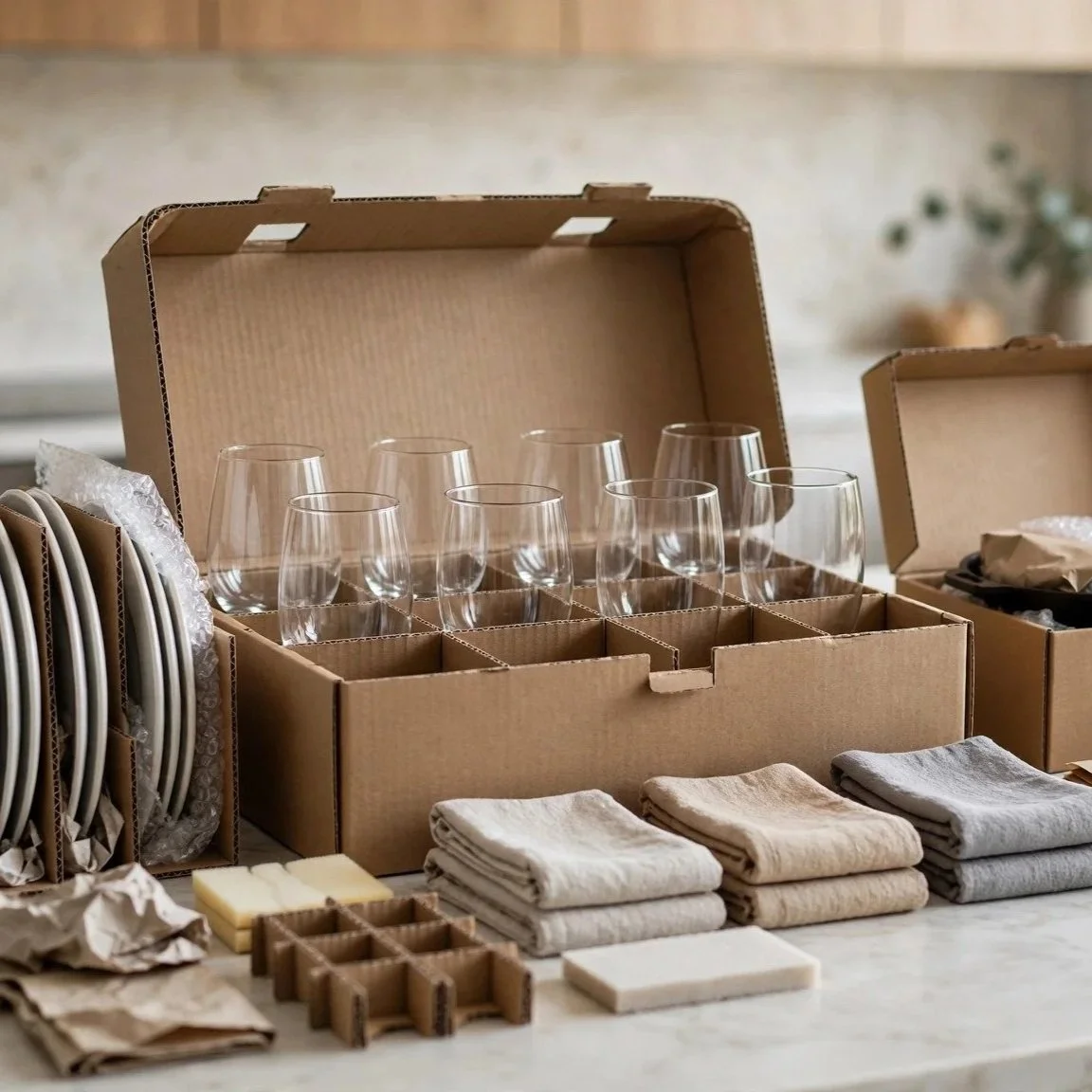
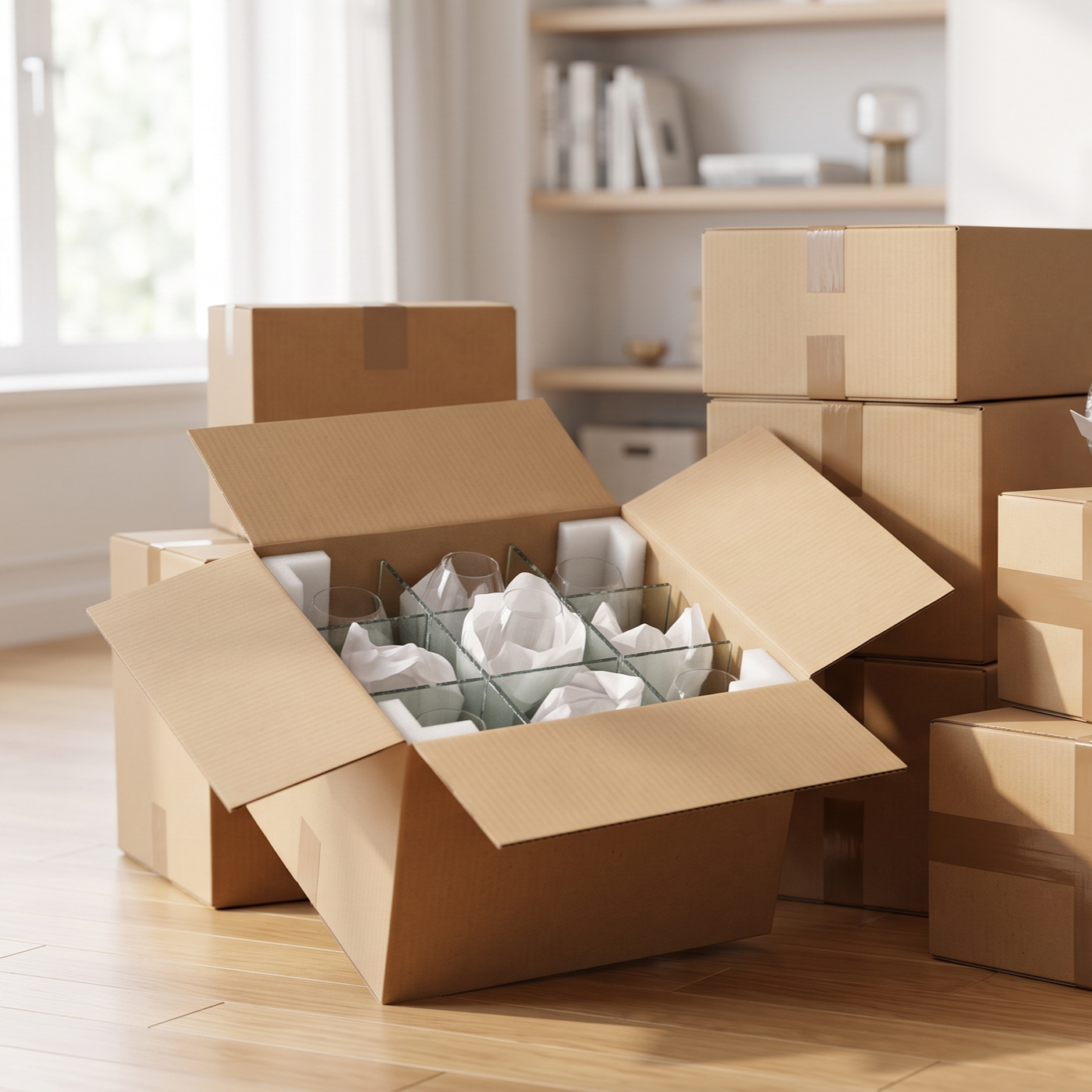
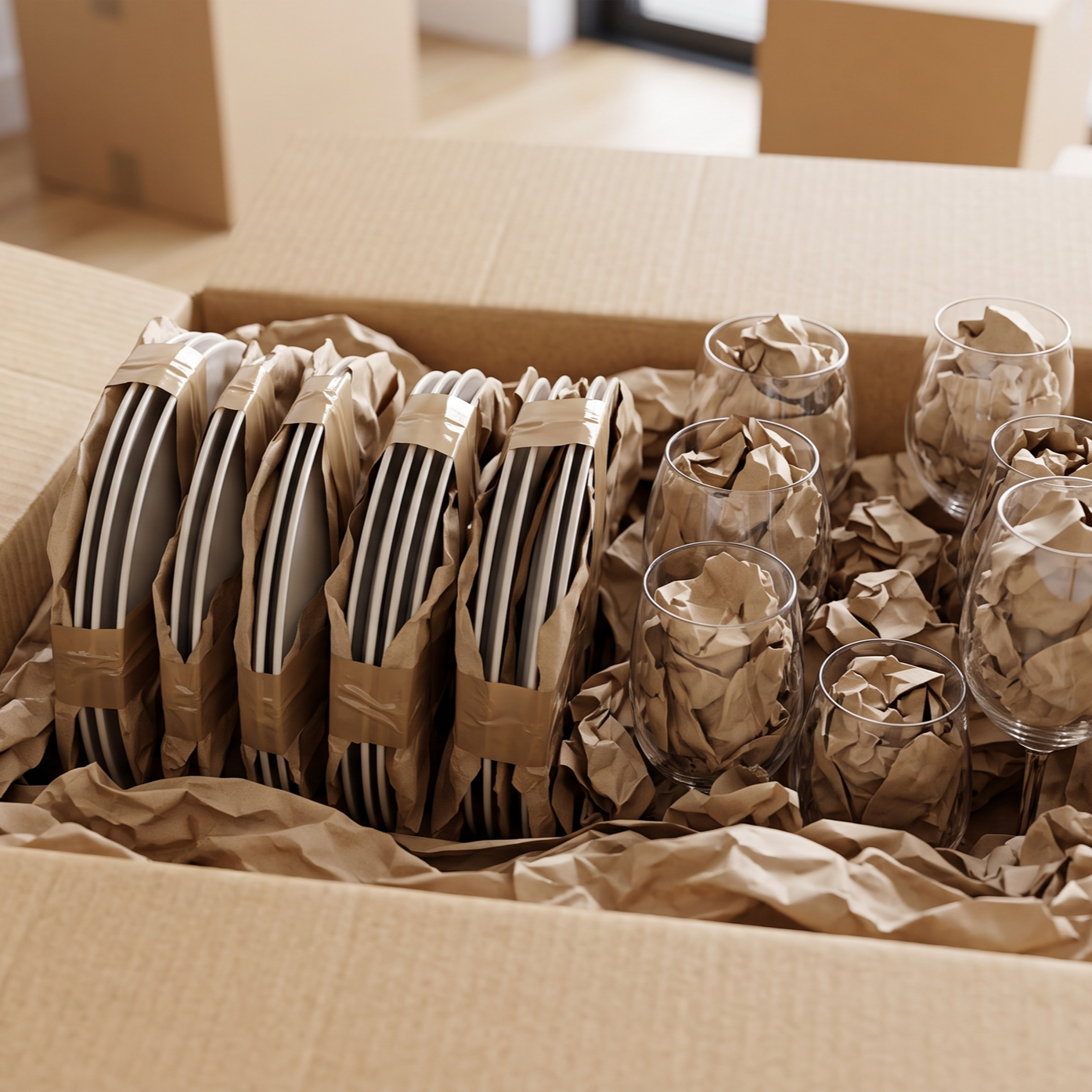
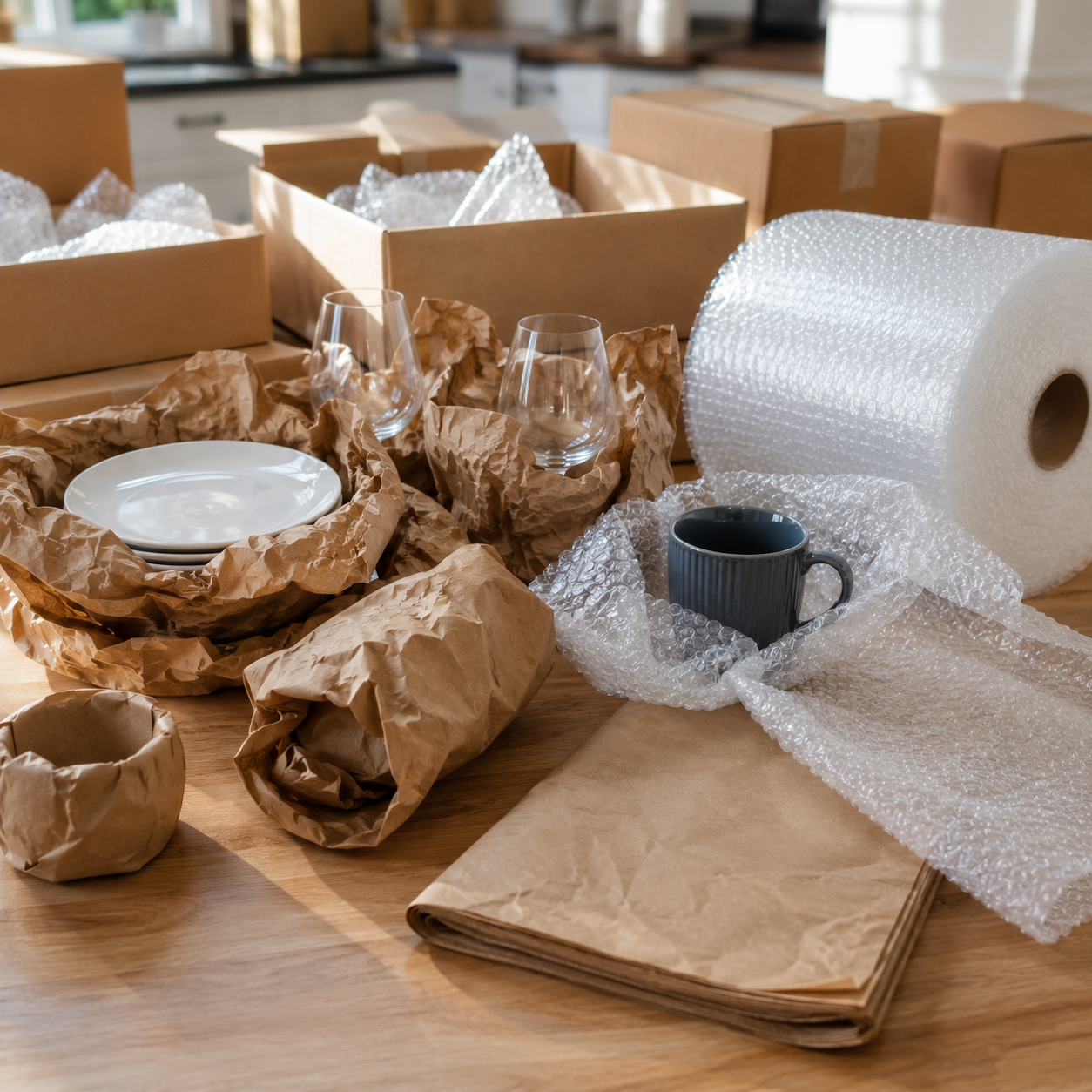
The kitchen is the room most people leave for last and regret leaving for last. It holds more individual objects than any other room in the house, and almost none of them pack the same way.
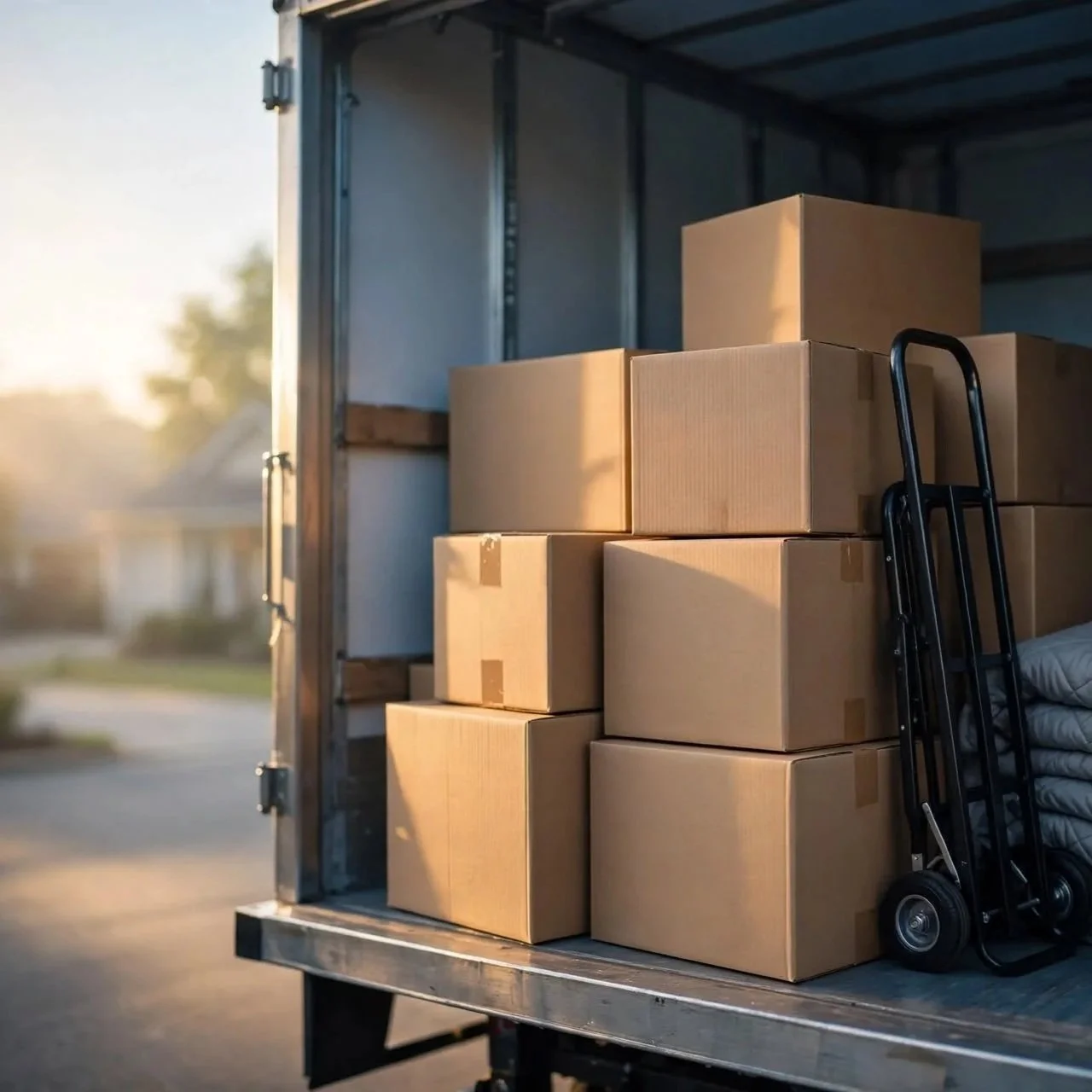
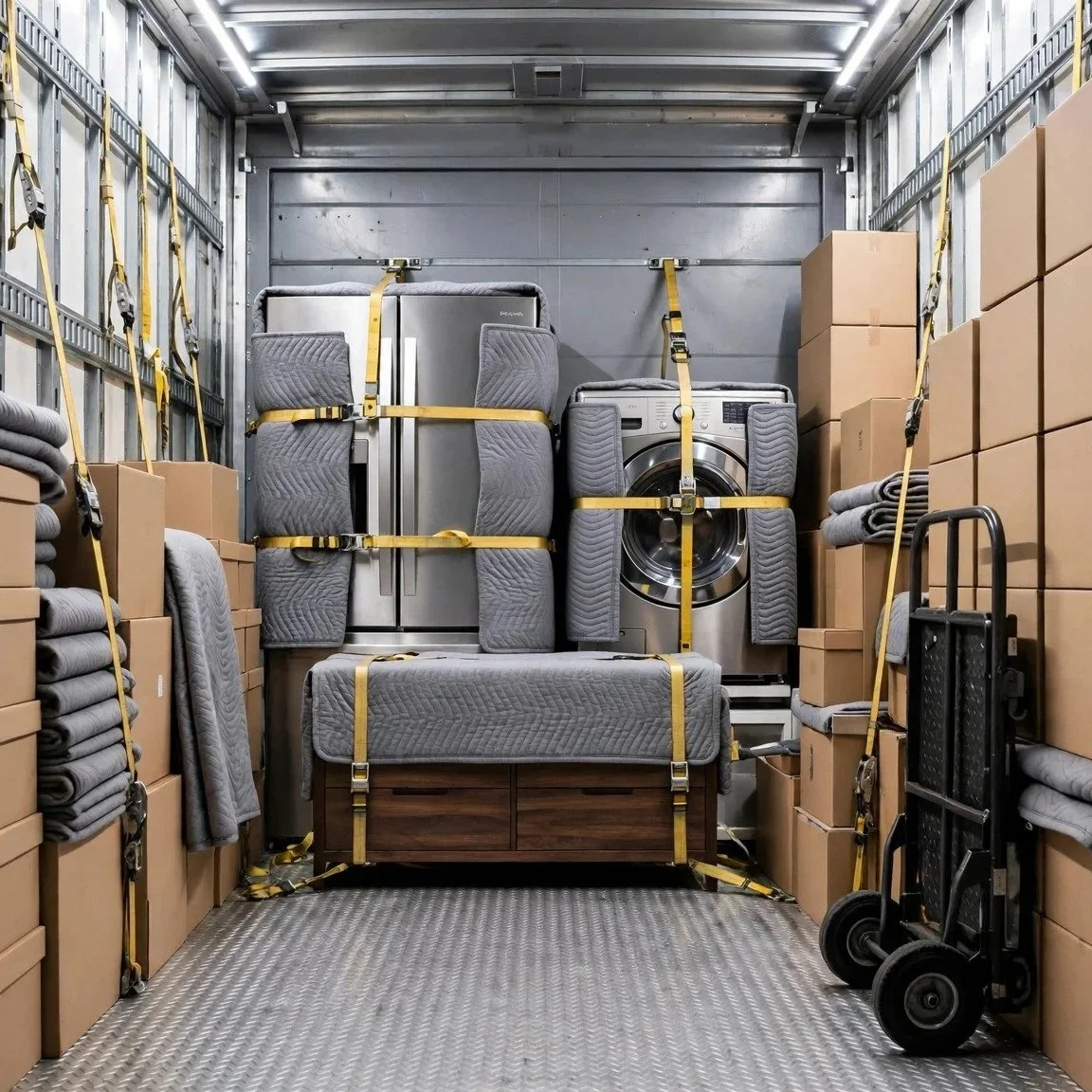
A well-packed truck is less like a stuffed closet and more like a brick wall: every layer bears on the one below it, the load leans against a solid backstop, and nothing has room to wander once the wheels start turning.
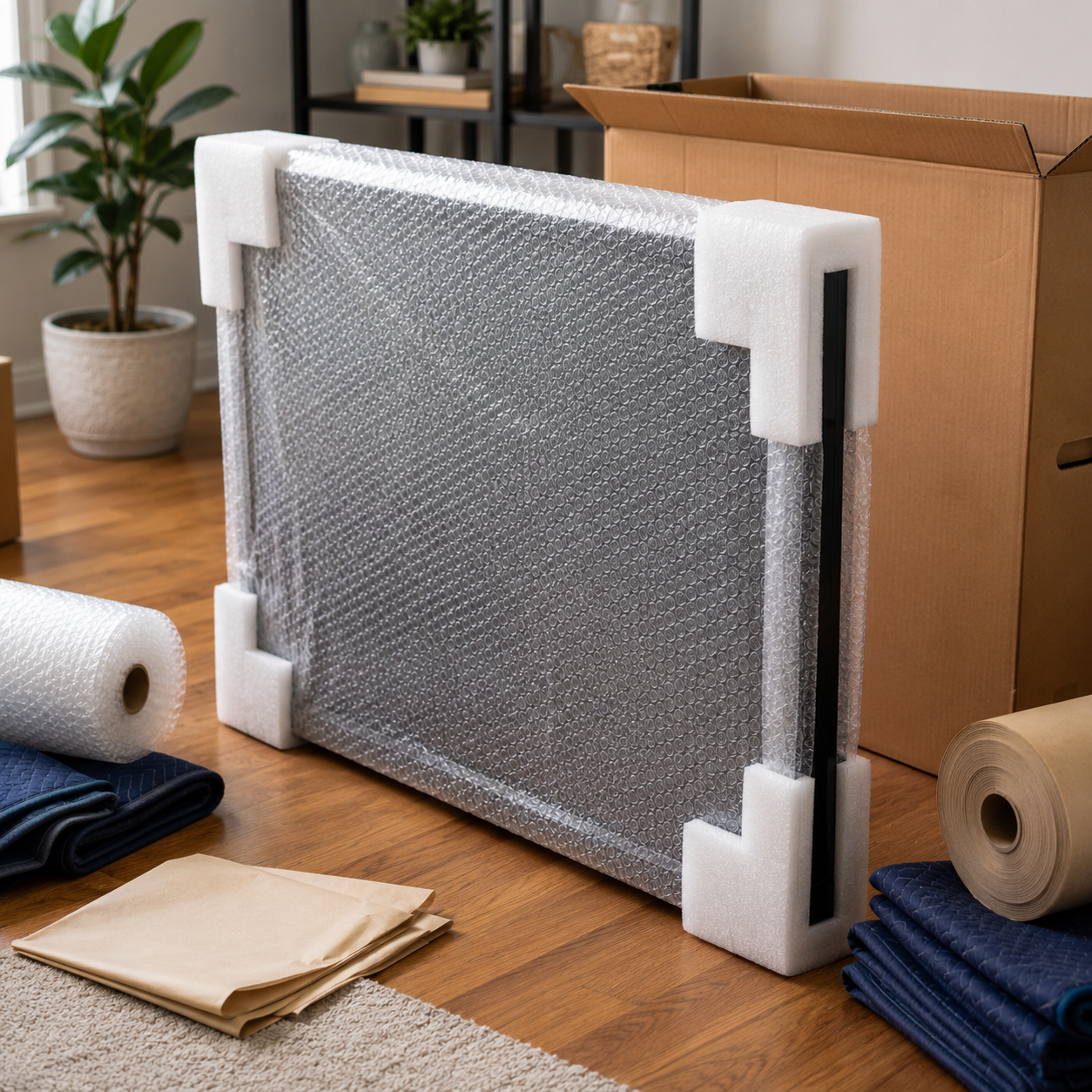
The screen is not a solid slab. It is a stack of paper-thin layers, a lit panel, filters, and a sheet of glass, bonded together and held rigid only by the frame around the edge.
Packing yourself is exactly what it sounds like: you gather materials, wrap every item, fill and label every box, and have it all ready before the truck arrives.
Stack plates the way they sit in your cupboard, lying flat on top of each other, and every bump in the road drives the whole stack down onto the bottom plate.