
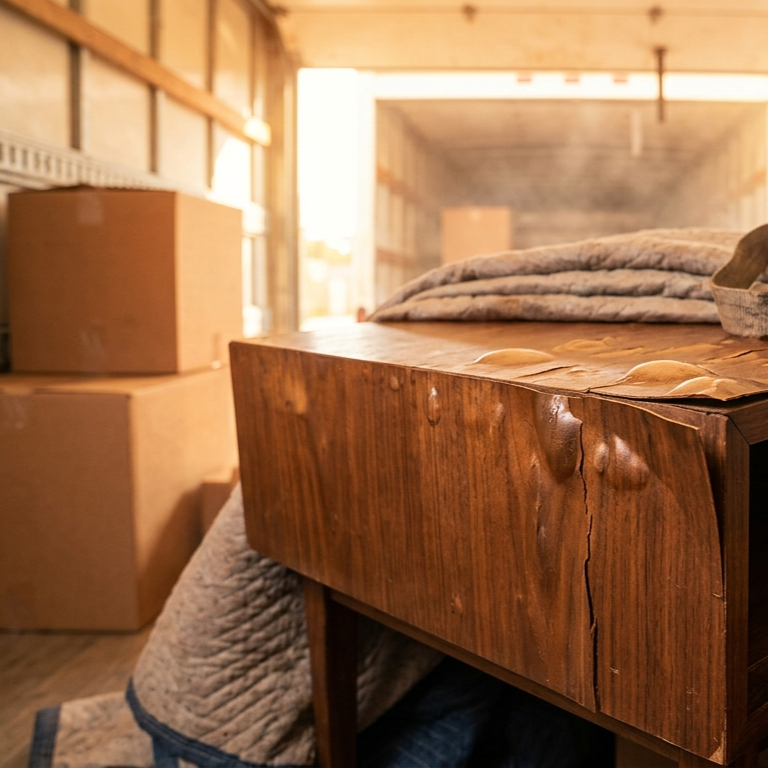
QUICK ANSWER: Yes, extreme heat in a moving truck can damage wood furniture, especially over a long trip. Heat and the humidity swings that come with it cause wood to expand and contract, which can lead to cracking, splitting, warping, loosened joints, and finish problems like bubbling, clouding, or stickiness. Glued joints and veneers are particularly vulnerable because heat can soften adhesives. The risk is greatest on long-distance summer moves where furniture sits in a hot cargo area for extended periods. You can reduce the risk by protecting pieces with moving blankets, loading carefully, avoiding prolonged heat exposure where possible, and handling antiques and delicate finishes with extra care.
A moving truck's cargo area can get brutally hot in summer — well above outdoor temperatures — and that raises a fair question for anyone moving wood furniture: can the heat actually damage it? The answer is yes, particularly on longer trips, because wood is sensitive to heat and the humidity changes that come with it. Understanding how heat affects wood helps you protect your furniture during a summer move.
Why Wood Reacts to Heat
Wood is a natural material that responds to its environment, particularly to temperature and humidity. As conditions change, wood expands and contracts — it takes on and releases moisture and reacts to heat by moving, however slightly. In the stable, climate-controlled environment of a home, this happens gently and causes no harm. But the inside of a moving truck is anything but stable: it can heat up dramatically, and that heat often brings humidity swings as well. Subjecting wood to those extremes and changes, especially over an extended period, creates the potential for damage. So, the issue isn't heat alone, but the stress of expansion, contraction, and moisture change it causes.
What Heat Can Do to Wood Furniture
The damage heat can cause to wood furniture takes several forms. The expansion and contraction from heat and humidity changes can lead to cracking and splitting in the wood, and to warping where pieces bow or twist out of shape. Joints can loosen as the wood moves and heat softens the glue holding them, weakening the structure of the piece. Finishes are vulnerable too: heat can cause a finish to bubble, cloud, soften, or become sticky, marring the surface. Veneers — thin wood layers glued to a surface — are especially at risk, because heat can soften the adhesive and cause the veneer to lift, bubble, or peel.
| Heat-related damage | What happens |
|---|---|
| Cracking / splitting | Wood expands and contracts under heat/humidity |
| Warping | Pieces bow or twist out of shape |
| Loosened joints | Wood movement plus softened glue weaken joints |
| Finish damage | Bubbling, clouding, softening, stickiness |
| Veneer lifting | Heat softens adhesive; veneer peels or bubbles |
What's Most at Risk
Not all wood furniture is equally vulnerable. Pieces with glued joints and veneers are more susceptible to heat damage because heat affects the adhesives. Antiques and older furniture can be more delicate, with finishes and construction that don't tolerate extremes as well. Delicate or specialty finishes are more prone to heat marring than tough, modern coatings. And solid wood pieces can still crack or warp from significant expansion and contraction. The longer the exposure and the more extreme the heat, the greater the risk to any piece, which is why long-distance summer moves, where furniture sits in a hot truck for days, pose more danger than a short local move.
How to Protect Your Furniture
You can reduce the risk with good moving practices. Wrapping and protecting wood pieces with moving blankets or pads helps buffer them and guard their surfaces and finishes against direct heat, scratches, and impacts. Loading furniture carefully and securely prevents the shifting and pressure that can compound heat-weakened joints. Where possible, minimizing how long furniture sits in extreme heat helps — though on a long-distance move, that's not always controllable. For especially valuable, antique, or delicate pieces, extra care and protective measures are worthwhile, and climate-controlled transport is an option some people use for the most sensitive items. Professional movers experienced with proper wrapping and loading can significantly reduce the risk to your furniture.
TIP: Pay special attention to antiques, veneered pieces, and anything with a delicate finish — these are the most vulnerable to heat. Wrapping them well in moving blankets and, for the most precious items, considering climate-controlled transport, protects the pieces that would be hardest to repair or replace if heat damaged them.
Why It's Worth the Care
Heat damage to wood furniture can be costly and sometimes hard to reverse — a cracked or warped piece, a bubbled finish, or lifted veneer may need refinishing or repair, and some sentimental or antique pieces are irreplaceable. Since the risk is real, especially on long summer moves, taking steps to protect your furniture is worthwhile. Proper wrapping, careful loading, and extra care for vulnerable pieces meaningfully reduce the chance of arriving with damaged furniture. Understanding that heat — through the expansion, contraction, and adhesive softening it causes — is a genuine threat is the first step to guarding against it.
Frequently Asked Questions
Can the heat in a moving truck damage wood furniture?
Yes, extreme heat can damage wood furniture, especially on long trips. Heat and the humidity changes that come with it cause wood to expand and contract, which can lead to cracking, splitting, warping, loose joints, and finish problems such as bubbling or stickiness. Glued joints and veneers are particularly vulnerable because heat softens adhesives. The risk grows with longer, hotter exposure.
How does heat actually damage wood?
Wood reacts to temperature and humidity by expanding and contracting. In a hot, fluctuating environment like a moving truck, that movement stresses the wood, causing cracking, splitting, and warping. Heat also softens the glue in joints and under veneers, loosening joints and lifting veneers, and it can bubble or cloud finishes. So the damage comes from the stress of expansion, contraction, and adhesive softening.
What wood furniture is most at risk from heat?
Pieces with glued joints and veneers are especially vulnerable because heat affects the adhesives. Antiques and older furniture can be more delicate, and specialty or delicate finishes may mar more easily than tough modern coatings. Solid wood can still crack or warp from expansion and contraction. The longer and more extreme the heat exposure, the greater the risk to any piece.
How can I protect wood furniture during a summer move?
Wrap and protect pieces with moving blankets or pads to buffer them from heat and guard their finishes, load furniture carefully and securely to prevent shifting, and minimize prolonged heat exposure where you can. Give antiques and delicate finishes extra care, and consider climate-controlled transport for the most sensitive items. Experienced movers with proper wrapping and loading reduce the risk significantly.
Is heat damage to furniture reversible?
Sometimes, but not always. A bubbled finish or lifted veneer may be repairable through refinishing, and minor issues can sometimes be addressed, but cracking, warping, and damage to antique or sentimental pieces can be costly or impossible to fully reverse. Because of that, preventing heat damage through proper protection is far better than trying to fix it afterward.
Should I use climate-controlled transport for furniture?
For especially valuable, antique, or delicate pieces, climate-controlled transport is a worthwhile option that avoids the temperature extremes of a standard truck. For ordinary furniture, good wrapping and careful loading usually provide adequate protection. Whether to use climate-controlled transport depends on the value and sensitivity of your pieces and the length of the move — it's most beneficial for the most vulnerable items.
Heat Is a Real Threat — Protect Accordingly
Extreme heat in a moving truck can damage wood furniture by driving the expansion, contraction, and adhesive softening that cause cracking, warping, loosened joints, and finish problems — with veneers, antiques, and delicate finishes most at risk. The danger is greatest on long summer moves. Wrapping pieces well, loading carefully, and giving vulnerable items extra protection meaningfully reduces the risk, so your furniture arrives in the condition it left.
Moving wood furniture and antiques in the summer heat — Get movers who wrap and handle your pieces with proper care. Aardvark Movers serves Phoenix and the Valley. Call (602) 716-5555.


