
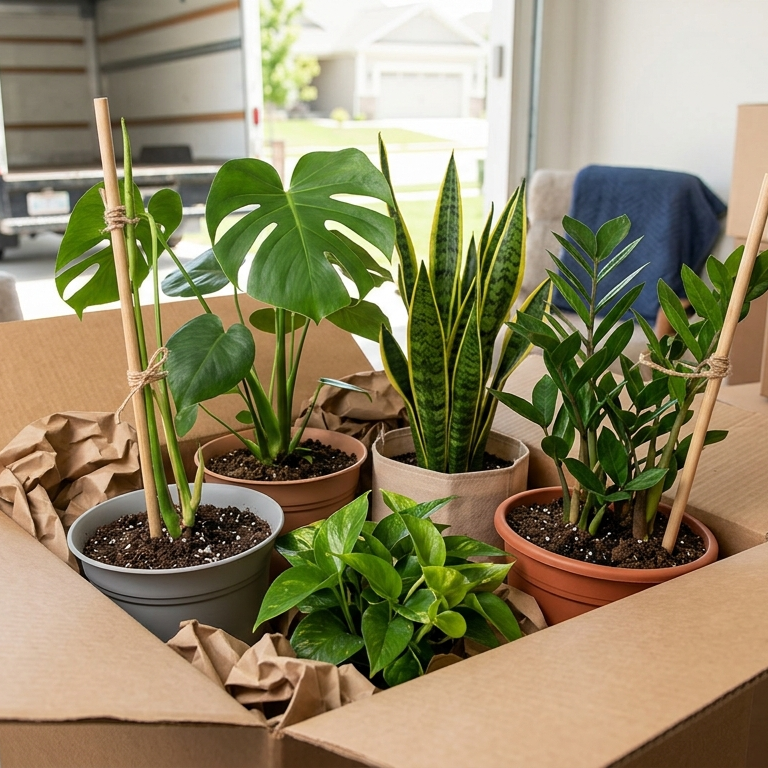
QUICK ANSWER: Keeping houseplants alive on a long-distance move comes down to preparation, careful packing, and managing their environment in transit. Prune and inspect plants a couple of weeks ahead, water them a few days before so the soil is moist but not soggy, and consider moving them to lightweight plastic pots. Pack them snugly in boxes with support so they don't tip or get crushed, and protect them from temperature extremes — a hot or freezing moving truck is the biggest danger, so many people transport plants in their own climate-controlled vehicle. Give them light, avoid leaving them sealed in a dark hot box too long, and settle them into their new home promptly.
Plants are some of the trickiest things to move long-distance — they're alive, fragile, sensitive to temperature, and easily damaged or stressed by a long trip. But with the right preparation and care, most houseplants can survive a move just fine. The keys are getting them ready ahead of time, packing them to prevent damage, and protecting them from temperature extremes that cause the most harm.
Start Preparing Weeks Ahead
The best moves start with preparation, and plants are no exception. A couple of weeks before moving day, inspect your plants for pests and disease so you're not transporting problems, and address anything you find. Prune away dead or overgrown growth to make the plants more compact and easier to pack, and to reduce the stress load on the plant. If your plants are in heavy ceramic or terracotta pots, consider repotting them into lightweight, shatterproof plastic pots for the move — it's gentler on the plants in transit and far easier to handle, with less risk of broken pottery damaging the plant or you. Doing this ahead of time lets the plants recover from any repotting stress before the trip.
Water Wisely Before the Trip
Watering timing matters. Water your plants a few days before the move so the soil is moist but not soggy on moving day. You want the plants hydrated enough to handle time in transit, but not so wet that the soil is waterlogged — overly wet soil is heavy, messy, can spill, and can promote rot and fungal issues during a closed-up trip. Moist-but-not-soaked is the target. Avoid watering right before packing, which leaves the soil sodden, or letting plants go bone-dry beforehand, which adds stress.
| Step | Timing | Why |
|---|---|---|
| Inspect for pests, prune | ~2 weeks before | Compact plants, avoid moving problems |
| Repot to plastic pots | ~2 weeks before | Lighter, safer in transit |
| Water moist (not soggy) | A few days before | Hydrated but not waterlogged |
| Pack snugly | Moving day | Prevent tipping and crushing |
| Protect from temp extremes | In transit | Heat/cold is the biggest danger |
Pack Them to Survive the Ride
Plants need protection from the physical jostling of a move. Pack potted plants snugly in boxes so they can't tip over or shift, using packing material to cushion and support them and to keep the pots upright. Taller plants may need support so the stems and foliage aren't crushed or snapped. The goal is to immobilize each plant so it rides securely without its soil spilling or its foliage getting damaged. If you're using boxes, don't seal them completely airtight for long periods, and avoid stacking heavy items on top of plant boxes.
The Biggest Danger: Temperature
For a long-distance move, the single greatest threat to your plants is temperature. The cargo area of a moving truck can reach extreme heat in summer or freezing cold in winter, and houseplants — used to stable indoor conditions — can be killed or badly stressed by those extremes. This is why many people choose to transport their plants in their own vehicle, where the climate can be controlled, rather than in the back of the moving truck. If plants must travel in a less-controlled environment, minimizing their exposure to extreme temperatures is critical. Heat in a closed truck is especially dangerous on a summer move, and a sealed dark box compounds it.
TIP: For a long-distance move, plan to carry your plants in your own climate-controlled car if at all possible. The back of a moving truck swings to temperature extremes that houseplants simply can't handle, so keeping them with you in a stable environment is the most reliable way to get them to the new home alive.
Light, Air, and Settling In
Plants also need light and air, which a long trip can deprive them of. Try not to leave plants sealed in dark boxes for extended periods, especially in heat, since a hot, dark, airless box stresses them quickly. If the trip is long, giving plants some light and air along the way helps. Once you arrive, settle your plants into their new home promptly — unpack them, give them appropriate light and water, and let them acclimate. Some transplant shock or a few dropped leaves after a move is normal; with prompt care in a good spot, most plants bounce back. The faster you get them out of transit conditions and into a stable environment, the better they recover.
Frequently Asked Questions
How do I keep my houseplants alive during a long move?
Prepare them a couple of weeks ahead by inspecting for pests and pruning, water them moist (not soggy) a few days before, and pack them snugly so they don't tip or get crushed. Most importantly, protect them from temperature extremes — the hot or cold cargo of a moving truck is the biggest danger, so transporting them in your own climate-controlled vehicle is ideal.
Should I water my plants before moving them?
Yes, but with timing in mind. Water them a few days before the move so the soil is moist but not soggy on moving day — hydrated enough to handle transit, but not waterlogged, which is heavy, messy, and can promote rot in a closed-up trip. Avoid soaking them right before packing or letting them go bone-dry beforehand.
Can I move plants in the moving truck?
You can, but the cargo area's temperature extremes — extreme heat in summer or freezing cold in winter — are the biggest threat to houseplants and can kill or badly stress them. That's why many people transport plants in their own climate-controlled vehicle instead. If plants must go in a less-controlled space, minimizing their exposure to temperature extremes is essential.
How do I pack potted plants for moving?
Pack them snugly in boxes so they can't tip or shift, using packing material to cushion and support them and keep the pots upright. Support taller plants so the stems and foliage aren't crushed. Repotting heavy ceramic pots into lightweight plastic ones beforehand makes them safer and easier to handle. Don't seal boxes airtight for long or stack heavy items on plant boxes.
Why does temperature matter so much for moving plants?
Because houseplants are used to stable indoor conditions, and the extreme heat or cold of a moving truck's cargo area can kill or severely stress them. Temperature is the single greatest danger to plants on a long-distance move, more than the jostling of transit. Keeping them in a controlled environment, like your own car, is the most reliable way to protect them.
Will my plants recover after the move?
Usually, yes, with prompt care. Some transplant shock or a few dropped leaves after a move is normal as plants adjust. Once you arrive, settle them into their new home promptly — unpack them, give them appropriate light and water, and let them acclimate. The faster you get them out of transit conditions and into a stable spot, the better they bounce back.
Prep, Protect, and Settle Them Quickly
Houseplants can survive a long-distance move when you prepare them ahead, pack them to prevent damage, and above all, protect them from the temperature extremes of a moving truck. Pruning and repotting beforehand, watering moist-not-soggy, packing snugly, and ideally carrying them in your own climate-controlled vehicle give them the best odds. Settle them into the new home promptly, and most plants will recover and thrive.
Planning a long-distance move with plants and prized belongings — Get experienced movers who handle your move with care. Aardvark Movers serves Phoenix and the Valley. Call (602) 716-5555.


