
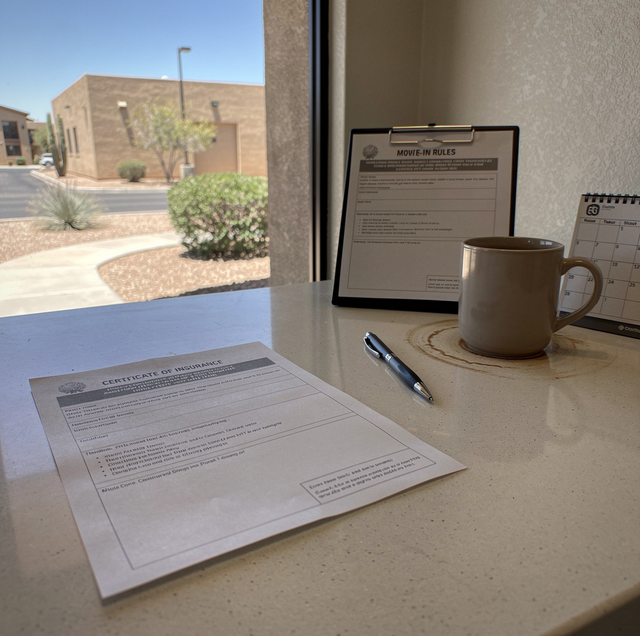
You have locked in a moving date, hired a crew, and started taping up boxes, and then an email lands from the property manager asking for a certificate of insurance, a freight lift reservation, and a signed move-in rules sheet, all due before the front office closes Friday. Nobody mentioned that moving into an apartment building means satisfying the building's checklist along with your own. Most of what a building asks for exists so one move doesn't damage a shared hallway, tie up equipment other residents need, or block the entrance during someone else's day. Once you know why each item exists, gathering it stops feeling like a scavenger hunt and becomes one more thing to line up in order.
Weeks Before: What the Building Wants From You
Property management usually stays quiet until you give them a move date, and then a short list comes back. The core of it is almost always a certificate of insurance from your moving company, a request to reserve the freight lift or loading dock for a specific window, and an acknowledgment that you've read the building's move-in rules. Some buildings also want your mover's business name and a contact number on file before the crew shows up at the front desk.
The reason buildings ask this early, rather than the week of your move, comes down to a shared calendar. A mid-size building might have several moves scheduled in a single week, all needing the same lift, the same loading dock, and the same stretch of hallway. Management allocates that equipment in blocks, first-come, so a request submitted early gets a workable slot, while a request submitted late gets whatever is left over, often an awkward midweek slot instead of the one you wanted.
Reserving the Freight Lift or Loading Dock
A building's freight or service lift is shared equipment, and most properties treat move-day access as a scheduled resource rather than something you show up and use. Booking it does two things: it blocks that lift or dock for your window so another resident's move doesn't collide with yours, and it tells staff to key the lift for exclusive use and hang its wall pads.
Reservation windows are usually measured in hours, not the whole day, which changes how a crew plans the job. A block of a few hours means the crew loads to that clock, not to whenever the truck happens to be full. When the unit is several floors up, and every trip to the truck crosses a stairwell or dock that holds the heat, requesting the earliest slot in the day matters more than it does for a ground-floor apartment, since a later window leaves the crew less room to slow down once the day heats up. Missing the window because paperwork was late doesn't just cost time; it usually means rebooking through the same office that issued the first one, and the next open slot might not match your moving date at all.
The Certificate of Insurance Buildings Ask For
A certificate of insurance, often shortened to a COI, is a one-page summary of your moving company's insurance coverage. Buildings ask for it because a move puts a truck, a crew, and heavy furniture through spaces the property is responsible for, and the certificate routes any damage claim to the mover's policy instead of leaving the building to sort it out after the fact.
A typical COI a building will accept includes a few standard lines:
- The moving company listed as the named insured.
- The building's ownership or management company listed as an additional insured and certificate holder.
- General liability coverage, and often commercial auto and workers' compensation, shown as active and current.
- A policy period that covers your actual move date, not one that expired the month before.
Ask your mover for their certificate of insurance the day you book them, not the week of the move. Buildings typically want it on file several business days ahead, and a late certificate can push your lift reservation to another day.
Many buildings list their own minimum coverage limits on that requirements sheet; hand the sheet to your mover so the certificate is written to it rather than guessed at.
The Building's Move-In Day Rules Sheet
Alongside the COI request, most buildings hand over a one-page rules sheet, and it tends to cover the same handful of items no matter which building you're in. Expect required hallway and lift interior protection, usually pads or rigid floor covering the crew installs before the first box moves. Expect a defined loading zone for the truck itself, since a truck parked across a fire lane or a resident parking row is often the fastest way to get a move flagged. Expect set hours, commonly a weekday daytime window, because staff needs to be on-site to supervise lift use and address deliveries. And expect a front-desk sign-in for crew members, partly for building security, and partly so staff knows who's authorized to be moving furniture through the halls.
Keep children and pets out of the lift lobby and hallway while the crew is running loaded dollies and furniture through them. A top-heavy dresser on a dolly cannot stop short, so let the crew clear the path and hold the lift.
A hallway without floor protection shows scuff marks and dented corners long after a single bad move, and it's the next several residents, not you, who have to look at it.
Staging the Job So the Reserved Window Holds
A crew that's done this before plans for it by staging: boxes and furniture are grouped near the lift door in the order they'll be loaded, so each lift cycle carries a full load instead of arriving to find nothing ready. That staging discipline carries more weight on some units than others. A stairwell with no air movement, or a loading dock with no shade, pushes a crew toward more water and shade breaks than a mild day calls for, and each of those breaks eats into a lift window that keeps running whether anyone is hauling boxes or not. A move at ground level, or on a mild day, leaves the crew room to take those pauses without falling behind; an upper-floor unit on a hot afternoon does not. Because a truck sitting at the curb during a long lift wait keeps baking in the sun the whole time, staging also shapes what goes on last: heat-sensitive items like candles, electronics, vinyl, and plants ride better when loaded in the final minutes than when sealed up for the length of the reservation.
Handling the Same Requirements at the Other End
If you're moving out of one apartment building and into another, the paperwork doesn't happen once. Your destination building will almost certainly want its own certificate of insurance, its own lift or dock reservation, and its own signed rules sheet, and it won't accept the ones your old building already approved. The building names on the COI have to match, since a certificate listing the wrong management company as the certificate holder gets rejected just as fast as no certificate at all.
The bigger scheduling challenge is timing two reservations against one truck. A delay unloading at a tight lift window on one end can eat directly into the window you booked at the other, so it helps to give your mover both buildings' contact information and requirements as soon as you have them, rather than handling one building at a time.
Frequently Asked Questions
Will a building accept a COI you forward yourself?
Not always. Some want a completed certificate sent directly by the mover's insurer or agent, not a copy forwarded by you, and will reject a PDF that arrives any other way.
What happens if the freight lift is out of service on moving day?
Ask the building in advance what its fallback is; some will rebook, some allow stair carries with the crew, and knowing which one decides whether the truck and crew are held or sent home.
Do I need renter's insurance too, separate from my mover's certificate?
Often, yes, and it's a different document from the moving company's COI. Some buildings require proof of a resident's own renter's insurance policy as a condition of the lease itself, unrelated to the move-day equipment reservation. That policy typically needs to be on file with the leasing office before move-in day, not the moving company's certificate.
Are there specific hours movers are allowed to use the lift?
Yes, though the specifics vary building to building. Many buildings pair that lift-hours window with quiet hours or a latest move-out time, so a job that runs past either one is stopped mid-load rather than allowed to finish.
Who's responsible if a hallway wall gets scuffed during the move?
The move-in rules sheet usually puts the reporting responsibility on the resident, not just the moving company, and most buildings expect any new damage to be noted before the crew leaves for the day. Damage discovered a week later is much harder to pin to a specific move once other residents have used the same hallway in between.
Does a load-only or labor-only crew need the same paperwork as a full-service mover?
Yes. Buildings generally apply the same requirements regardless of service level; any company sending a crew and equipment into the building needs its own current certificate of insurance and its own lift or dock reservation, the same as a full-service crew would.
Send your mover the building's requirements sheet the day you get it — that's what gets the certificate written to the building's exact name and the crew staging the job around your reserved lift window. Aardvark Movers serves Phoenix and the Valley. Call (602) 716-5555.


