
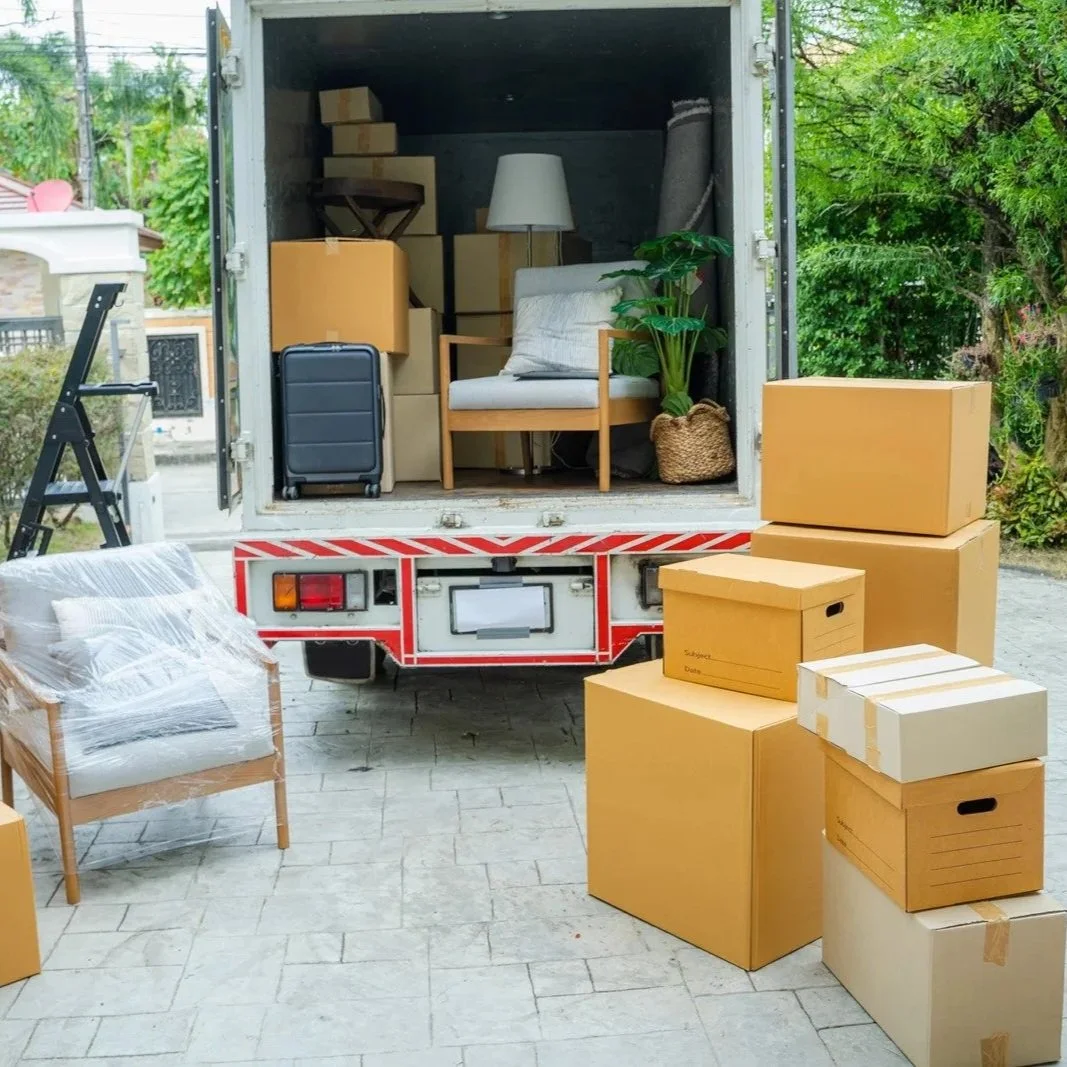
A lot of people assume load-only movers do exactly what a full-service crew does, just without driving the truck at the end. That assumption leads to confusion on move day. Load-only, sometimes called labor-only loading, is its own service with its own rules: the crew works around a truck or container you already control, on a schedule you set, and their job stops the moment the door rolls down and locks. They are not responsible for the drive, the fuel, the parking permit at the destination, or unloading unless you book that separately. Understanding that boundary before move day is what actually makes load-only worth choosing.
Why the Confusion Happens
Full-service crews plan a job around their own truck, route, and unloading window. A load-only crew has to plan around equipment they didn't choose and can't control the size of. That single difference changes almost everything about how the job gets staged, timed, and staffed.
The Core Trade-Off: You Handle the Truck, They Handle the Labor
Load-only makes the most sense when you can confidently answer one question: do I already have the right vehicle or container reserved? If a rental truck, a moving container, or a company trailer is sitting in the driveway (or scheduled to be), a load-only crew steps into one narrow, specific role. They bring furniture pads, dollies, straps, and hand trucks. They do not bring the box truck itself.
What this trade-off buys you: Control over the rental reservation, the ability to choose a truck size that matches your own judgment of your belongings, and a labor bill that reflects loading time only, not drive time or fuel.
What it requires from you: Getting the truck size right, having it on-site and accessible before the crew arrives, and knowing roughly what needs to go in first versus last.
Signs a Rented Truck or Container Already Fits the Job
Load-only fits best in a handful of recurring situations:
A rental truck or a container-style unit (the kind a company drops off and later picks up) is already reserved for a specific window.
The move is a one-way haul where a full crew will unload later, sometimes days apart, which is common with seasonal or temporary relocations where belongings go into storage before a permanent address is settled.
The household has already done its own packing and just needs bodies and equipment for the heavy lifting.
The person driving wants that control themselves rather than handing it to a moving company's driver.
If none of those apply, if there's no truck reserved, or if the plan involves driving the loaded truck across state lines without a driver lined up, full-service or a combined load-and-transport option usually fits better.
How a Load-Only Crew Sizes the Job Without Choosing the Truck
Because the crew doesn't select the vehicle, sizing the job correctly starts with a walk-through against whatever's being loaded, not against the truck's capacity. A crew lead typically checks the inventory against the door height, ramp angle, and interior length of whatever showed up in the driveway, then makes a call about load order on the spot. This is where a mismatch shows up fast: if the truck is undersized for the inventory, the crew can't manufacture extra cubic footage; they can only advise on what to prioritize.
What the Crew Actually Controls
Load order and stacking sequence
Furniture pad placement and protective wrapping at pinch points like doorframes and stair rails
Strapping and tie-down points inside the cargo box
Disassembly of large items that won't clear doorways or fit upright
What the Crew Does Not Control
Truck or container size
The rental reservation window
Fuel, mileage, or the drive itself
Weight Distribution Is Not Optional, Even When You're Not Driving
A load-only crew still has to load with the eventual drive in mind, even though they won't be behind the wheel. Heavy items (appliances, boxed books, dressers) go in first, low, and toward the front of the cargo box closest to the cab, so the weight sits forward over the front axle instead of riding out past the rear wheels. Lighter, bulkier items like lampshades and empty hampers go in last, on top and toward the back, where they won't crush anything underneath. Get this wrong, and the imbalance shows up the moment the truck pulls onto a highway ramp: a load that's heavy in the back makes the rear end feel light and skittish over bumps and lane changes, the same unsettled wobble as a shopping cart loaded with all the heavy cans stacked over the back wheels instead of centered low in the basket.
Container-style units change this calculation. Because a POD-style container sits flat on the ground rather than riding on a truck's axles, there's no fore-aft weight balance to manage in the same way. The loading priority shifts to floor-level distribution and making sure nothing shifts during transport by the container carrier's own truck.
When Timing Coordination Gets Tricky
The single biggest failure point in load-only moving is timing, not labor. A rental truck reservation, a container drop-off, and a crew arrival are three separate schedules run by three separate parties, and none of them automatically talk to each other. If the truck isn't in the driveway when the crew shows up, the clock they're working against starts ticking with nothing to load. If a container's scheduled drop-off runs late because of weather, whether that's a sudden downpour that delays a delivery truck or a dust storm that grounds outdoor work for safety, the crew's arrival window needs to flex too.
Practical fix: Confirm the truck or container is on-site and accessible at least an hour before the crew's scheduled arrival, and build a buffer into both reservations rather than stacking them back-to-back.
Heat adds its own wrinkle to timing, in either direction depending on the season. A sealed cargo box that's sat closed in direct sun can turn into an oven inside of an hour, hot enough that the interior wall is uncomfortable to touch, which matters for candles, electronics, vinyl records, houseplants, and finished wood furniture that can warp or discolor if they sit in that heat for the whole loading window. Crews sometimes stage those items last and load them closest to the door specifically so they spend the least time inside a hot box. In cooler stretches, that heat risk drops away, but stair and upper-floor apartment moves still call for pacing breaks so the crew isn't rushing heavy items down narrow stairwells.
Situations Where Load-Only Makes Less Sense
Load-only starts to strain when any of these apply:
No reserved truck yet. Booking a crew before locking in the vehicle risks a mismatch nobody can fix on move day.
A long-distance drive with no assigned driver. Someone still has to get the loaded truck to the destination.
Heavy specialty items without the right equipment already on hand, since some of that equipment travels with the crew and needs to be scheduled for, not assumed.
A commercial or office move with tight after-hours access windows, where coordinating a rented truck's arrival with a building's loading dock schedule adds a layer of risk that a full-service booking absorbs more smoothly.
How Load-Only Fits Alongside Unload-Only and Full-Service Options
Load-only is one piece of a modular set of options, not a standalone category. The same crew skill set that loads a truck can also unload one, and plenty of moves book both ends separately: load-only at the origin, unload-only at the destination, with days or weeks of storage or transit in between. That split is especially common for seasonal or temporary residents moving belongings ahead of a permanent move-in date. Others book hourly labor-only help for a single heavy item, like a piano or a gun safe, layered on top of a load-only job rather than as its own trip. The point of separating load, transport, and unload into distinct services is flexibility: pay for the labor stage that's actually needed, rather than the full package by default.
Frequently Asked Questions
How many crew members does a typical load-only job need?
A two-person crew is standard for a studio or one-bedroom load, while a three- to four-person crew is more typical for a three-bedroom house or larger, since more hands keep the loading pace ahead of a ticking rental-truck clock.
What truck size actually fits a multi-bedroom household?
As a rough guide, a 15- to 16-foot box truck handles a one- to two-bedroom apartment, while a 26-foot box truck is closer to what a four-bedroom house needs; getting this size wrong is the most common reason a load-only job runs into trouble mid-load.
Does load-only include taking apart furniture, such as bed frames or treadmills?
Yes. Crews carry basic hand tools (Allen wrenches, screwdrivers, a socket set) for items like bed frames, dining tables, and exercise equipment, and they'll typically bag and tape hardware to the matching piece so it isn't lost in transit. Reassembly at the destination is not included unless it's booked as a separate unload-only or full-service step.
What happens if the crew arrives and the truck turns out to be too small?
The crew lead will flag the shortfall before the door closes rather than force an overloaded stack that risks damage in transit. The usual fallback is scheduling a second trip with the same truck once it's unloaded at the destination, or, for a handful of bulky-but-light leftovers, seeing if a personal vehicle can carry the overflow the same day.
Can a load-only crew handle a piano as part of the job?
Piano moving calls for dedicated equipment, a piano board, ramp, and a dolly rated for the weight, and it's usually scheduled as an add-on to a load-only booking rather than something a general crew handles with standard furniture equipment.
How far ahead should a truck rental be locked in before booking load-only labor?
Popular truck sizes at rental yards near move-heavy weekends (the last few days of the month, when most leases turn over) often book out one to two weeks ahead, so locking in the size and pickup time early helps avoid being bumped to a smaller truck than the inventory needs. Share the confirmed pickup window with the crew as soon as it's locked so both schedules are built around the same anchor point.
Load-only works best as a deliberate choice, not a default one. Know the truck, know the timing, and the labor piece falls into place around it.
Book a load-only crew — get hourly labor-only help for your rented truck or container without paying for a full-service package. Aardvark Movers serves Phoenix and the Valley. Call (602) 716-5555.


